10 Genius Tips to Organize Your Pantry and Prepare Meals Easily
Do you get frustrated when preparing something in the kitchen and looking for a specific ingredient for your dish but can't find it? You have to put some effort into organizing your pantry.
A well-organized pantry is a game-changer in the kitchen. When you open your pantry door, it looks neat and tidy, and you can easily get the ingredients you need for your recipes, saving you a lot of time and money.
According to a recent survey, the average American household wastes 31.9% of the food they buy, which is about $1,866 per year.
This post provides you with ten ideas for organizing your pantry. Following these tips can transform your humble pantry into a smart one.
Why Is Pantry Organization Important?

Pantry organization is not only about aesthetics; it's about having a powerful weapon in the kitchen and your daily life. Let's see why it's worth spending time organizing your pantry:
Save time: No more browsing through messy shelves. It only takes a few minutes to find what you're looking for.
Reduce food waste: Write down what you have so that it won't expire if you forget.
Simplify meal planning: When you can see your inventory at a glance, it becomes easy to create a menu.
Promote healthier eating: This is true because when healthy foods are available and easy to see, people are more likely to buy them.
Save money: This can save you a lot of money.
Reduce stress: Developing a system for organizing your pantry will help create order and reduce stress in the kitchen.
Maximize space: Organizational skills help utilize every square inch of available storage space.
Improve food safety: Storing and rotating items ensures they are fresh and don't spoil or become inedible.
Inspire creativity: It's easier to be creative when you can see your ingredients and are encouraged to try new ones.
Simplify grocery shopping: It's easy to know what needs to be restocked, and shopping trips become efficient.
Considering all of these advantages will improve the functionality of your kitchen and ensure a better way to prepare and consume meals.
10 Brilliant Strategies for a Beautiful Pantry
Once you've determined the state of your pantry, the next step is to start organizing. Here are ten great tips to help you organize and design a neat and efficient pantry that makes meal planning easy.
1. Organize and Sort
How to start your pantry makeover:
Empty your pantry and group items by category.
Donate unused products and throw away spoiled ones.
Sort items like baking ingredients, canned goods, snacks, etc. This process gives your pantry a fresh look and makes it easier to assess the contents.
A National Association of Professional Organizers survey showed that 50% of homeowners consider the kitchen the messiest area. To overcome this statistic, the first thing you need to do is get organized.
2. Buy Clear, Airtight Containers
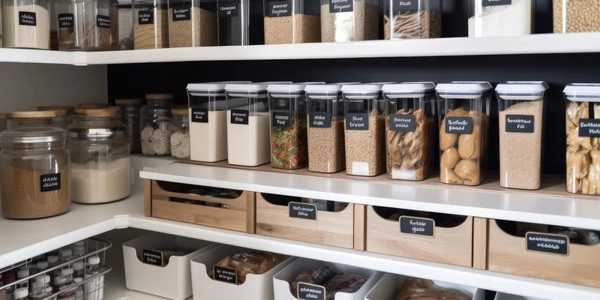
Put dry foods like flour, sugar, pasta, and cereal in clear, airtight containers. This strategy keeps food fresher longer and allows you to easily see when supplies are running low. Choose stackable containers to maximize vertical space.
Airtight storage can extend the shelf life of pantry staples by up to 6 months, significantly reducing food waste.
3. Label Everything
Use a label maker or chalkboard labels to label every container and shelf. This way, everyone in the family knows where items belong, and restocking becomes easier. Don't forget to put expiration dates on labels for perishable foods.
A survey by the Container Store found that 83% of people feel more in control of their lives when they organize their homes, and clear labeling is a big part of that.
4. Implement a FIFO (First In, First Out) Approach
Arrange items so that older products are at the front and newer products are at the back. Making sure you use items before they expire helps prevent food waste. This is especially helpful for canned goods and other shelf-stable foods.
The USDA estimates that 30-40% of the food supply goes to waste. Implementing a FIFO can significantly reduce your family's contribution to these statistics.
5. Utilize Vertical Space with Stackable Shelves
Add stackable shelves or risers to maximize vertical space in your pantry. This creates extra layers on existing shelves, allowing you to store more items without creating clutter.
A study by the National Association of Home Builders found that 85% of homebuyers prioritize adequate storage space. Utilizing vertical space can help meet this need in any kitchen.
6. Install Door Organizers
Make the most of the often-overlooked space behind your pantry door by installing door organizers. This is perfect for storing spices, condiments, or small snacks.
A survey by Kitchen Storage Solutions found that adding door storage can increase the usable space in your pantry by up to 20%. This simple addition can significantly improve the functionality of your pantry without major renovations.
7. Group Similar Items Together
Divide your pantry into zones based on food type or meal category. Store baking ingredients in one area, breakfast ingredients in another, and snacks in a designated spot. This system can make it easier to find what you need and speed up meal prep.
A study in the Journal of Consumer Research found that people are 40% more likely to choose healthy foods when grouped together and easily visible.
8. Create Designated Areas
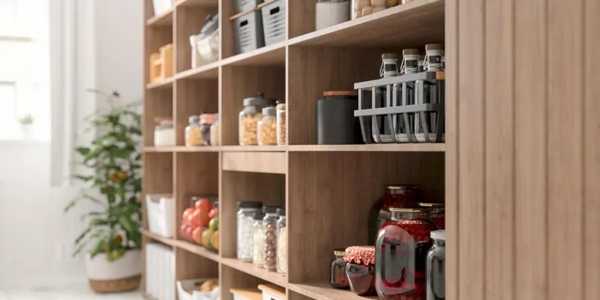
Designate certain areas for different purposes—baking, snacks, canning, etc. This will make it easier to find items and store groceries.
According to a National Kitchen and Bath Association report, 85% of homeowners find that designated areas improve their cooking efficiency and overall kitchen experience.
9. Use a Turntable for Easy Access
Place a turntable or other rotating tray in your pantry to make it easier to reach hard-to-reach corners. These are great for storing oils, vinegars, or shot glasses.
A study by the Organizing Committee found that using a turntable can reduce the time spent searching for items by up to 50%, making food prep more efficient and less stressful.
10. Maintain a Supply List System
Keep a running list of items in your pantry on a whiteboard or digital app. Update it as you use items or buy groceries. This will help avoid overbuying and ensure you always know what you have on hand.
A survey by the Food Marketing Institute found that households that maintain an inventory system spend an average of 20% less on food each year.
Conclusion
If you follow these ten genius tips, you'll be well on your way to creating an organized and functional pantry. Remember, finding a system that works for you and your family is key.
If you're feeling overwhelmed, start small. Implementing just one or two of these ideas can make a big difference. As you organize, you'll likely waste less food, save money, and spend less time searching for ingredients.
That means more time for what's important: enjoying delicious meals with the people you love. Remember to check your pantry organization system every few months to ensure it works.
With a little effort and care, your newly organized pantry will continue to be a source of calm and efficiency in your kitchen for years to come.
FAQs
Q: How often should I clean and reorganize my pantry?
A: Try to deep clean and reorganize your pantry every 3-4 months and do a quick cleanup once a week. This keeps things feeling fresh and your system running smoothly.
Q: What's the best way to store a lot of food in a small pantry?
A: Use airtight containers for bulk dry goods. Stack them vertically to save space. Label them clearly and store less frequently used items on higher shelves.
Q: How can I make my pantry more kid-friendly?
A: Keep healthy snacks for kids at eye level. Use clear containers so they can easily see the contents. Consider using a small step stool to help you reach safely.